In a development that has sent ripples through Uganda’s political landscape, Mawokota South legislator Yusuf Nsibambi has formally crossed from the opposition to the ruling National Resistance Movement (NRM).
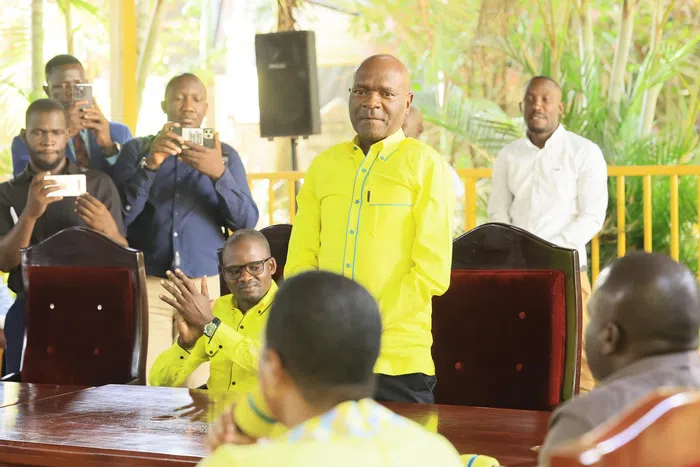
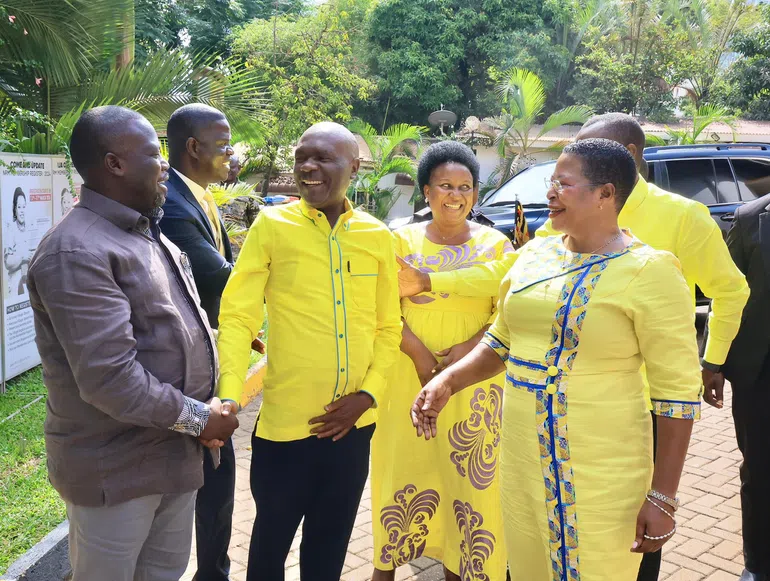
Nsibambi, who last month lost his parliamentary seat in the January 15 general elections to NRM’s Suzan Nakawuki, was officially unveiled at the party headquarters in Kyaddondo. The event was presided over by Speaker of Parliament Anita Among and attended by senior party officials and supporters.
The defection has sparked sharp debate, particularly given Nsibambi’s recent affiliation with the Forum for Democratic Change (FDC), one of Uganda’s most prominent opposition parties.
Speaking shortly after his unveiling, Nsibambi declared his readiness to work with the ruling party, emphasizing what he described as a commitment to national development and stability.
“I am eager and ready to work with the movement to advance the interests of Ugandans,” he said, framing his decision as one guided by experience gained during his time in Parliament.
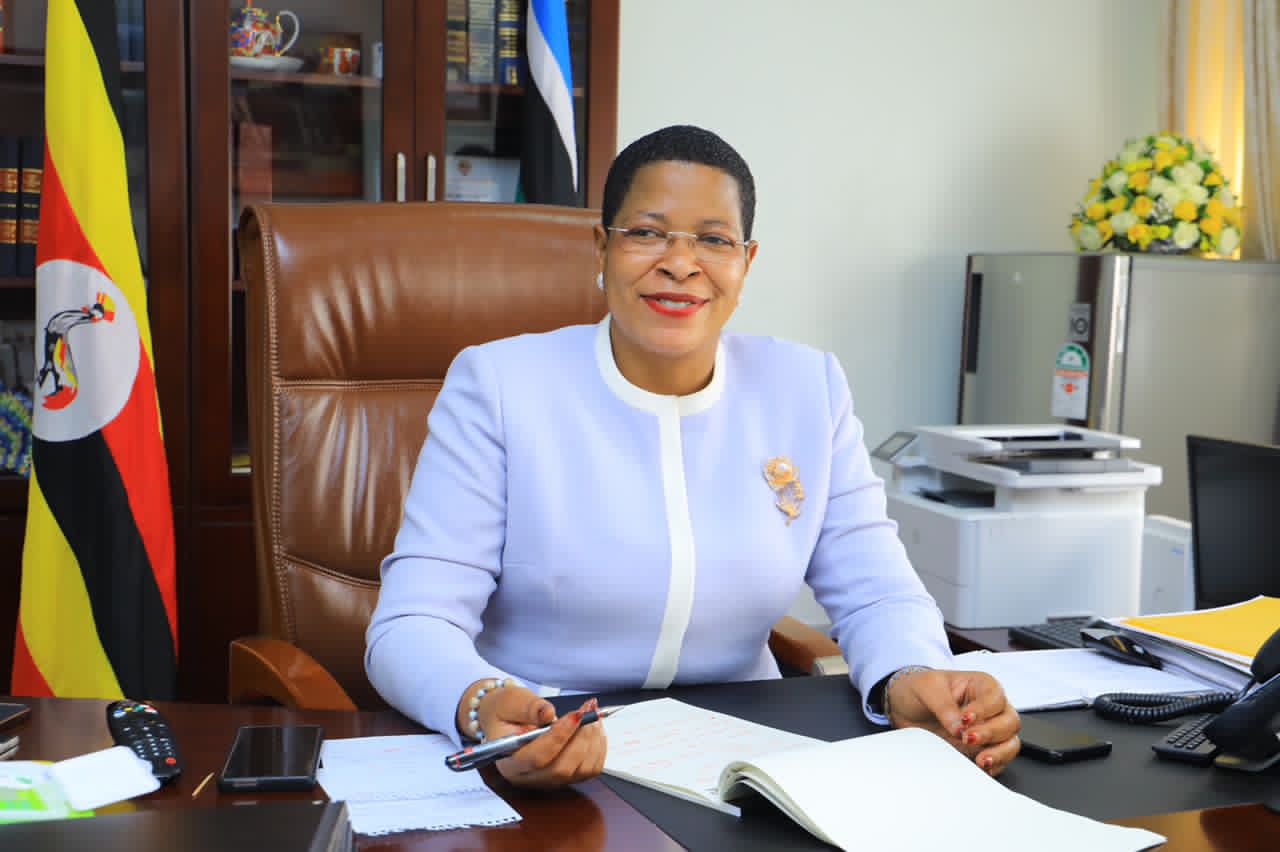
Speaker Among welcomed him into the NRM fold, praising what she termed his recognition of the party’s role in safeguarding Uganda’s gains.
“We appreciate your decision to join the movement dedicated to strengthening our nation,” she stated.
Nsibambi’s move comes barely weeks after he lost his seat to the NRM’s Suzan Nakawuki — a detail critics argue raises questions about political survival rather than ideological realignment. Political analysts suggest the timing may fuel speculation that the defection is strategic, especially after an electoral setback.
The controversy is further amplified by Nsibambi’s recent leadership of a delegation of opposition legislators to State House in Entebbe, where they met President Yoweri Museveni. The meeting, which included about 17 lawmakers from various parties, was described as an effort to ease post-election tensions, promote reconciliation, and discuss national concerns such as the fate of political detainees.
While participants framed the State House engagement as dialogue rather than alliance-building, Nsibambi’s subsequent defection has intensified public scrutiny.
The move is likely to deepen tensions within opposition ranks, particularly inside the FDC, where party loyalists have previously criticized members accused of cozying up to the ruling establishment.
Whether Nsibambi’s shift signals a broader realignment or remains an isolated political migration remains to be seen. What is clear, however, is that his transition to the NRM adds another chapter to Uganda’s evolving post-election political narrative — one that continues to stir both support and controversy across the country.